Romance Glossary · by Sera Voss
Slow Burn Romance: What It Means and Why the Wait Is the Point
Slow burn romance means the attraction builds across an entire book.
What the term means, why the wait pays off, and where to feel it yourself.
Last updated: 1 October 2026
Slow burn romance is a pacing style where the attraction between two characters builds gradually across most of the book instead of igniting early.
If you would rather feel the build than read about it, The Starfall Accord holds its tension for fourteen chapters before the first kiss.
Three free chapters let you test the pacing before you pay, and no email is collected.
Sample the burn, three chapters freeEvery near miss, held glance and interrupted moment adds pressure, so by the time the couple finally admits it, the reader has spent the whole book waiting with them.
The trope that makes you wait, because the waiting is the entire point.
It is not a delay for its own sake. It is a deliberate structure that uses restraint, obstacles, and rising tension to make the eventual payoff feel earned.
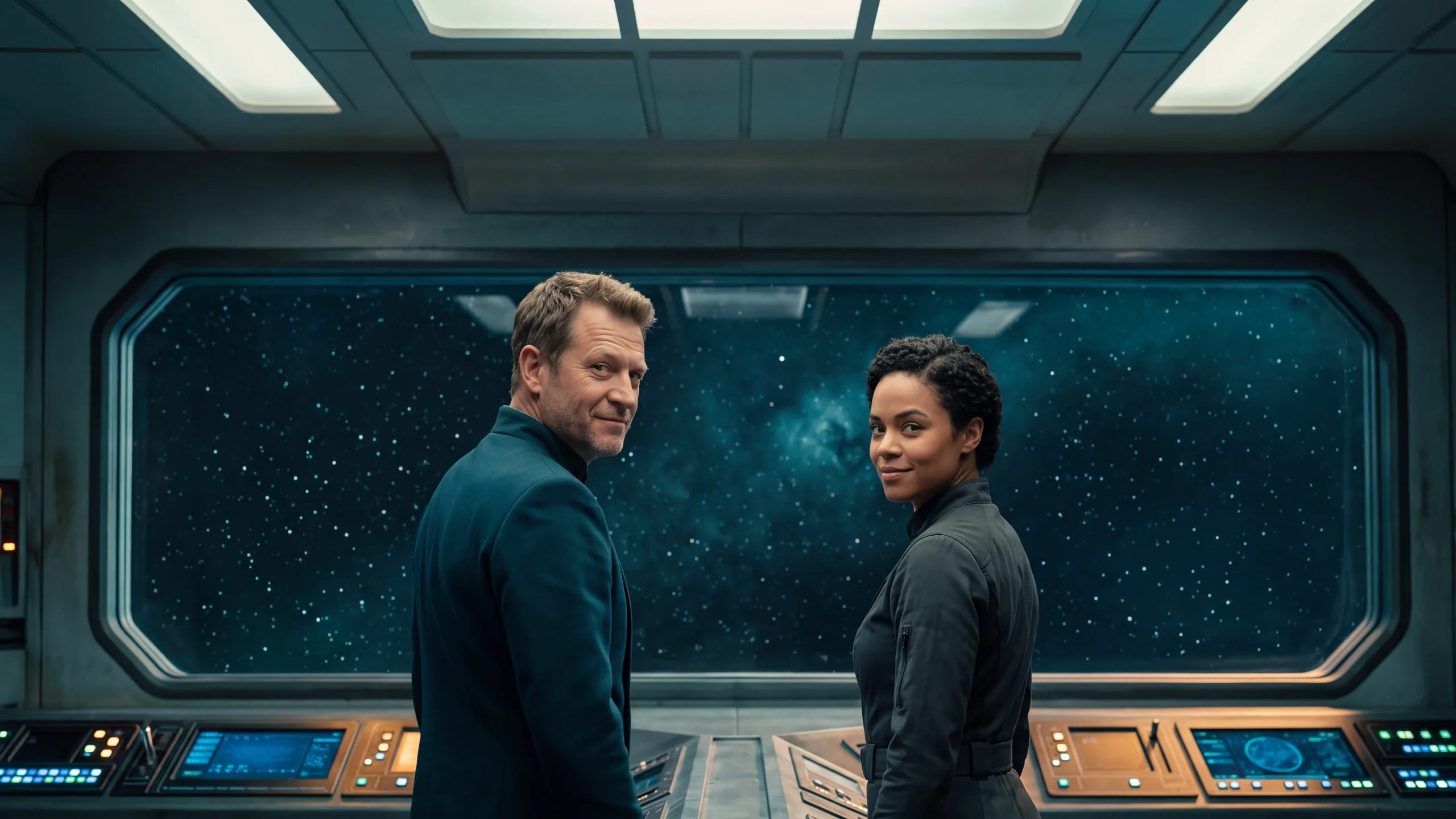
Chapter 1: two officers from opposing factions, assigned to the same warship.
How a Slow Burn Actually Works
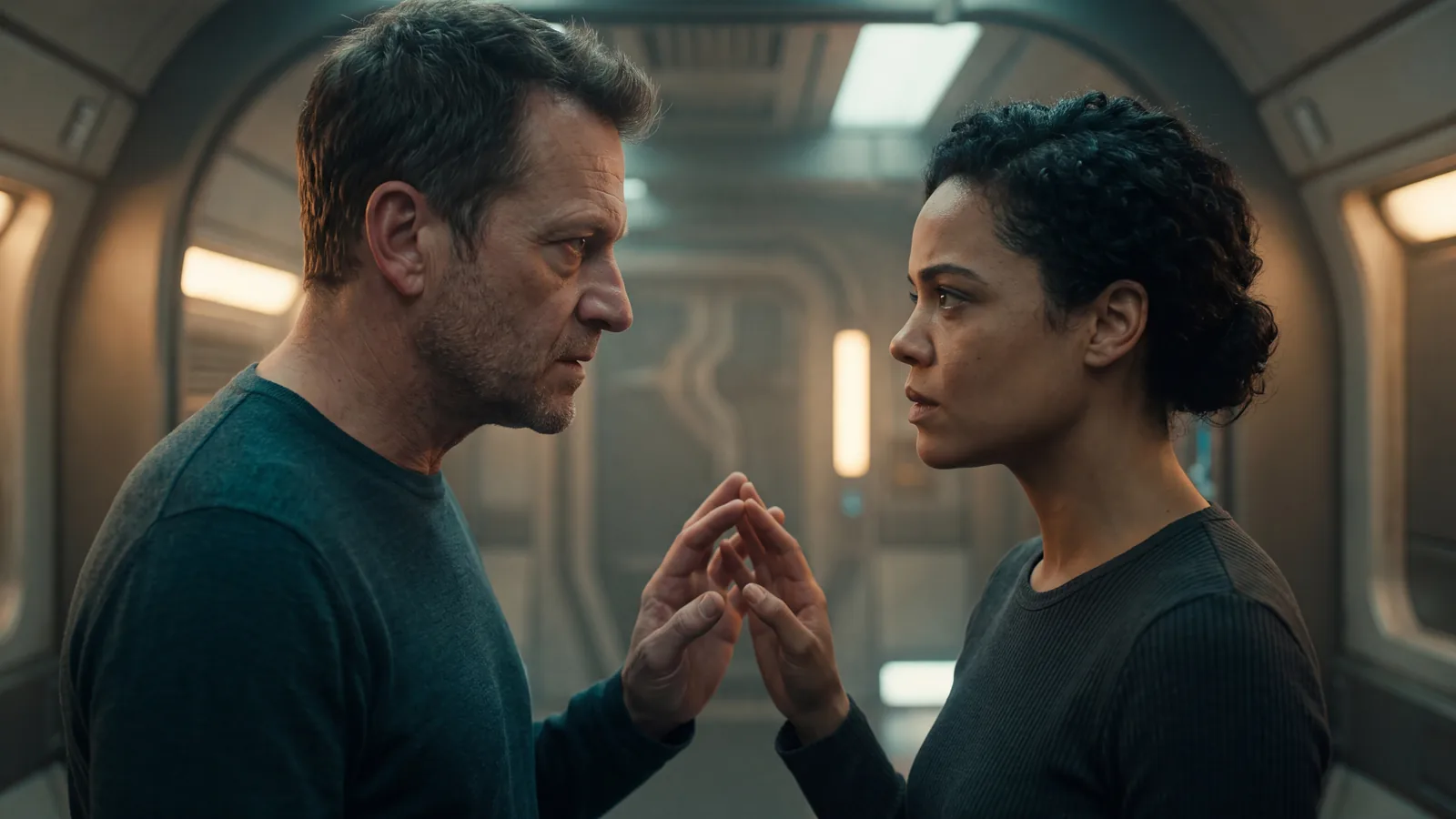
A slow burn keeps the central couple apart for most of the story. Not because nothing happens between them, but because too much happens and none of it resolves:
- A favor neither of them will admit mattered
- A confession rewritten as an insult at the last second
- A door held open one beat longer than the moment required
Each one adds weight. None of them releases it.
The tension compounds chapter after chapter until the payoff, when it finally arrives, carries everything that came before it.
Slow Burn Done Right: The Starfall Accord
The slow burn is the backbone of The Starfall Accord by Sera Voss.
Commander Thane Aldric holds himself at a distance because he believes his crew stays alive that way, while Coalition Liaison Kira Vasic arrives owing him nothing and hunting whoever is sabotaging his ship.
A crisis neither of them can outrun keeps putting them in the same room, and the tension between them compounds rather than resolves.
How the slow burn plays out here:
- Fourteen chapters before the first kiss, out of twenty two in total
- Dual POV (both points of view), so you watch both of them resist and know what each is hiding before the other does
- Enemies to lovers, which gives the burn genuine antagonism to start from
- No aliens, a human cast on both sides of the romance, and a door that stays shut when the pressure peaks
- One book that resolves in full, so the long wait actually pays
The rest of the trope vocabulary is explained in the romance glossary.
Read chapters one to three, freeSera Voss's debut runs the burn across around ninety thousand words of dual POV enemies to lovers between a human only cast with no aliens. It pays off in full in one standalone book, with a complete HEA (a happily ever after) and no cliffhanger.
See the book · coming soonAustralian buyers pay GST and EU buyers pay VAT on top where it applies. UK ebooks carry no VAT.
Frequently asked questions
What is slow burn romance?
Slow burn romance is a pacing style where the attraction between two characters develops gradually across most of the book rather than igniting early.
The tension builds through small moments, restraint, and delayed contact, so the eventual emotional payoff lands harder because the reader waited for it.
How long does a slow burn take to pay off?
There is no fixed rule, but a true slow burn holds the central relationship in tension for most of the page count.
In a novel of roughly 90,000 words, the leads may not fully resolve their feelings until the final chapters, which is what separates slow burn from a standard romance arc.
What is the difference between slow burn and fast burn?
Fast burn brings the couple together early and explores the relationship after.
Slow burn keeps them apart longer, using obstacles, restraint, and rising tension to delay the payoff.
Slow burn readers value the build itself as much as the resolution.
Free reader's guide
Get the Starfall Accord Field Guide
No spoilers.
Know exactly what you are getting before you spend a cent, and the Field Guide lands in your inbox as soon as you leave your email.
Inside: The crew · The two factions · The trope map · Full content safety notes.
You will also be the first to know the day The Starfall Accord goes on sale.
Ready to Fall Into the Stars?
Enemies. Allies. Something more. The Starfall Accord begins with a single, impossible truce.