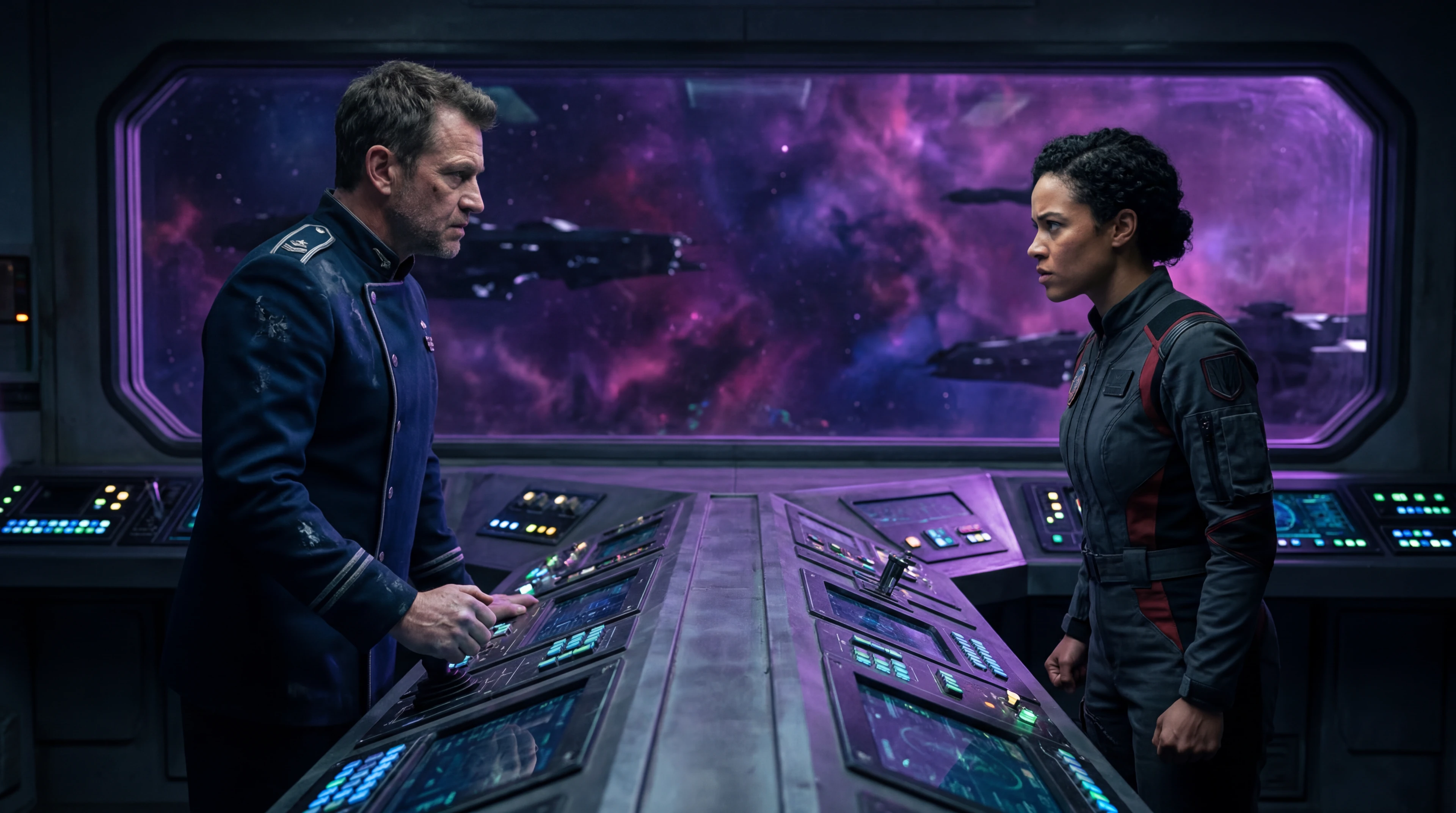
Slow Burn Enemies to Lovers Books in Space: Fourteen Chapters Before the First Kiss
Slow burn enemies to lovers books keep two people who have every reason to hate each other trapped in the same small place, and make them wait for chapters. The shelf below holds eight sci fi versions of that wait.
The Starfall Accord by Sera Voss runs that structure for fourteen chapters aboard one warship, closed door and human only.
She was sent to kill him. He does not know it yet.
Enemies to lovers · Slow burn · Dual point of view · Closed door · Humans only, no aliens
You Have Been Searching for This Book
You know what you want.
You just haven't found it yet.
You want the tension to hold well past the opening chapters, and to still be holding when you are desperate for it to break.
Enemies to Lovers Slow Burn Space Opera Books, Best Fit First
Eight books where two people on opposite sides of a war must share a ship. They are ordered by how much of the trope each one actually delivers.
The first four carry both halves of the phrase; the last four carry one half well, and each row says which.
Every row also states the heat level. Each one names who put that rating on the book, because science fiction romance almost never ships with a stated one.
The Starfall Accord is this site's own book, written by Sera Voss.
Every other book named here belongs to its own author, and none of those mentions is paid, sponsored, or an affiliate link.
It has no reader reviews yet because it has not launched, so the free opening chapters are the fairest test.
The Starfall Accord
by Sera Voss, 2026
Carries: Enemies to lovers and slow burn · Cast: Human only · Heat: Closed door
He gave the order that killed her squadron, and she is assigned to his ship anyway.
Twenty two chapters aboard one decommissioned warship, with the first kiss at chapter fifteen and nothing explicit on the page.
Standalone, with a complete happy ending and no cliffhanger.
Stated by the author in the book's own description.
This is this site's own book, as disclosed above, and it sits in the same list so it faces the same columns as every other row.
Shards of Honor
by Lois McMaster Bujold, 1986
Carries: Enemies to lovers and slow burn · Cast: Human only · Heat: Closed door
Officers from two warring worlds are stranded together and learn to rely on each other.
This is the foundational version of the trope in space, and it is still the one everything else is measured against.
Series status is not recorded in this site's catalogue.
Closed door.
This is our editorial estimate, not a publisher statement.
Baen Books' own listing states no door label.
Defy the Stars
by Claudia Gray, 2017
Carries: Enemies to lovers and slow burn · Cast: Human and android · Heat: Closed door
A devout human soldier and an enemy android cross an interstellar war in the same small ship.
Written for a young adult audience, and the fall is genuinely gradual.
One lead is an android, so read it as a human and machine pairing rather than two humans.
Series status is not recorded in this site's catalogue.
Closed door.
This is our editorial estimate, not a publisher statement.
Little, Brown's own listing states no door label.
This Is How You Lose the Time War
by Amal El-Mohtar and Max Gladstone, 2019
Carries: Enemies to lovers and slow burn · Cast: Not stated · Heat: Closed door
Two rival agents on opposite sides of a war trade letters that turn from taunts into love.
Lyrical and deeply slow, and set across time rather than strictly in space, so take it as adjacent reading rather than space opera.
Series status is not recorded in this site's catalogue.
Closed door.
This is our editorial estimate, not a publisher statement.
Saga Press's own Simon and Schuster listing states no door label.
Polaris Rising
by Jessie Mihalik, 2019
Carries: Enemies to lovers · Cast: Human only · Heat: Open door
A runaway heiress is locked up with a notorious fugitive she has to strike a deal with.
Captor and captive antagonism that turns slowly, with heat on the page rather than behind a closed door.
Series status is not recorded in this site's catalogue.
Open door, moderate heat.
This is our editorial estimate, not a publisher statement.
Harper Voyager's own listing states no door label.
Hunt the Stars
by Jessie Mihalik, 2022
Carries: Enemies to lovers · Cast: Human and alien · Heat: Open door
A human bounty hunter is forced to take a job from the alien general she fought in the war.
The romantic lead is Valoff, so this one is not a human only read.
Series status is not recorded in this site's catalogue.
Open door heat.
This is our editorial estimate, not a publisher statement.
Harper Voyager's own listing states no door label.
Matched
by L.H. Whitlock, 2020
Carries: Enemies to lovers · Cast: Human and alien · Heat: Closed door
A rebel commander and an enemy general discover ancient markings that name them a match.
Fated mates does the work the slow burn does elsewhere, so the hostility resolves faster than it does on the rest of this shelf.
Book one of Galactic Battle.
Stated as clean in the book's own subtitle on the Amazon listing.
The clean edition's listing adds that kissing, light cursing and suggestive situations occur.
Winter's Orbit
by Everina Maxwell, 2021
Carries: Slow burn · Cast: Human only · Heat: Not stated
An arranged marriage space opera where the leads start as wary, distrustful strangers rather than enemies.
The burn is genuinely slow and unusually soft, which is the point of it.
Series status is not recorded in this site's catalogue.
No door label stated by the publisher.
Four of the eight keep the cast human only. Two of those keep the door shut as well.
Trope, cast and heat level come from publisher and retailer listings and reader discussion, current to September 2026.
None of it comes from our own reading of the books.
Open the listing for any title here and read its own content notes before you start.
The Starfall Accord is not for you if you want the fall inside three chapters, or any heat on the page, because it gives you neither.
- Yours to keep, on any device
- Direct from the author
- EPUB and PDF included
- Australian Consumer Law rights kept
Works on Kindle. Amazon's own Send to Kindle accepts the EPUB.
The Man Who Gave the Order. The Woman Sent to End Him.
What happens when hatred has nowhere left to hide.
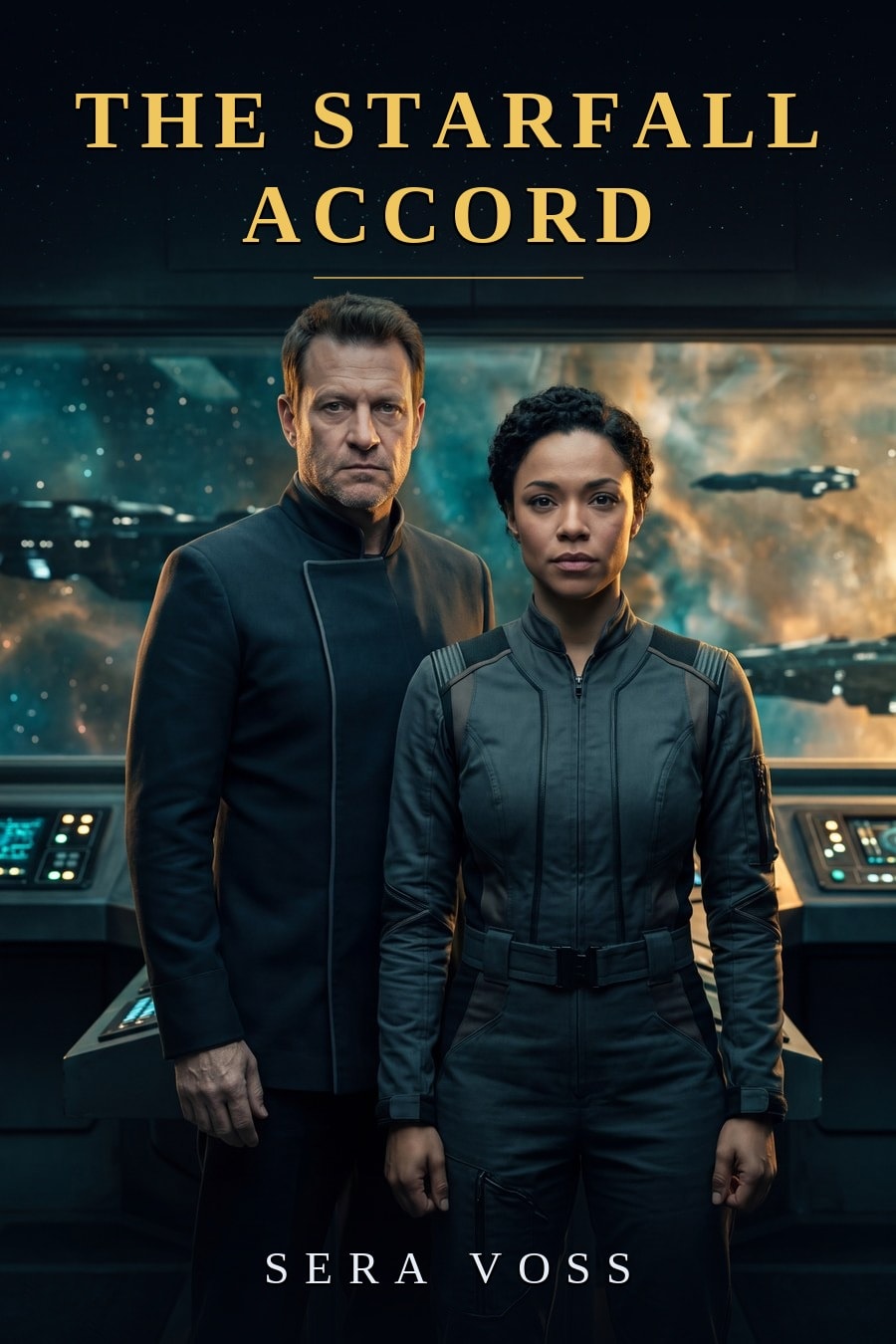
Commander Thane Aldric
He gave the order that destroyed her squadron, and he knows the name of every pilot who did not come home.
He gave up his command. He stayed aboard anyway, as the ship's diplomatic liaison.
He eats alone in the galley after everyone else has left, and through his chapters you see everything.
He says nothing.
Kira Vasic
She carries encrypted orders and 43 names she recites before every mission.
She did not come aboard the Meridian to forgive anyone, and those orders authorise his execution if the ceasefire collapses.
She catches herself watching him on bridge watches that stretch past midnight, and notices he never defends the order he gave.
She hates that this changes anything.
Through her chapters, you know before she does.
Read the first three chapters, then decide if the tension is real.
No email required · no commitment.$4.99 USD (plus GST or VAT where it applies) ebookVerified, Not Promised
Here is how this one delivers the cover tropes.
- Enemies to lovers
- Not banter masking instant attraction. He ordered the strike that killed her squadron. She carries the names of every pilot who did not come home. The hatred is earned, and so is everything that replaces it.
- Slow burn that earns its name
- No kiss before chapter 15 of 22.
- Space opera setting where the technology and politics matter
- Encrypted intel, reactor diagnostics, treaty negotiations, and a conspiracy to restart a war drive the plot.
- Forced proximity aboard a warship with no transfer available
- Shared meals neither of them can pretend are professional.
- Dual POV
- You see him fall first and feel her resistance crack.
- Found family
- A crew of six. Loyalty forged through operational necessity.
- Closed door romance
- The emotional intimacy does all the work.
- Morally complex characters
- Both wrong about something. Both right about something else.
- Standalone with a guaranteed happy ending
- Complete romance. Resolved mystery. No cliffhanger. No sequel required.
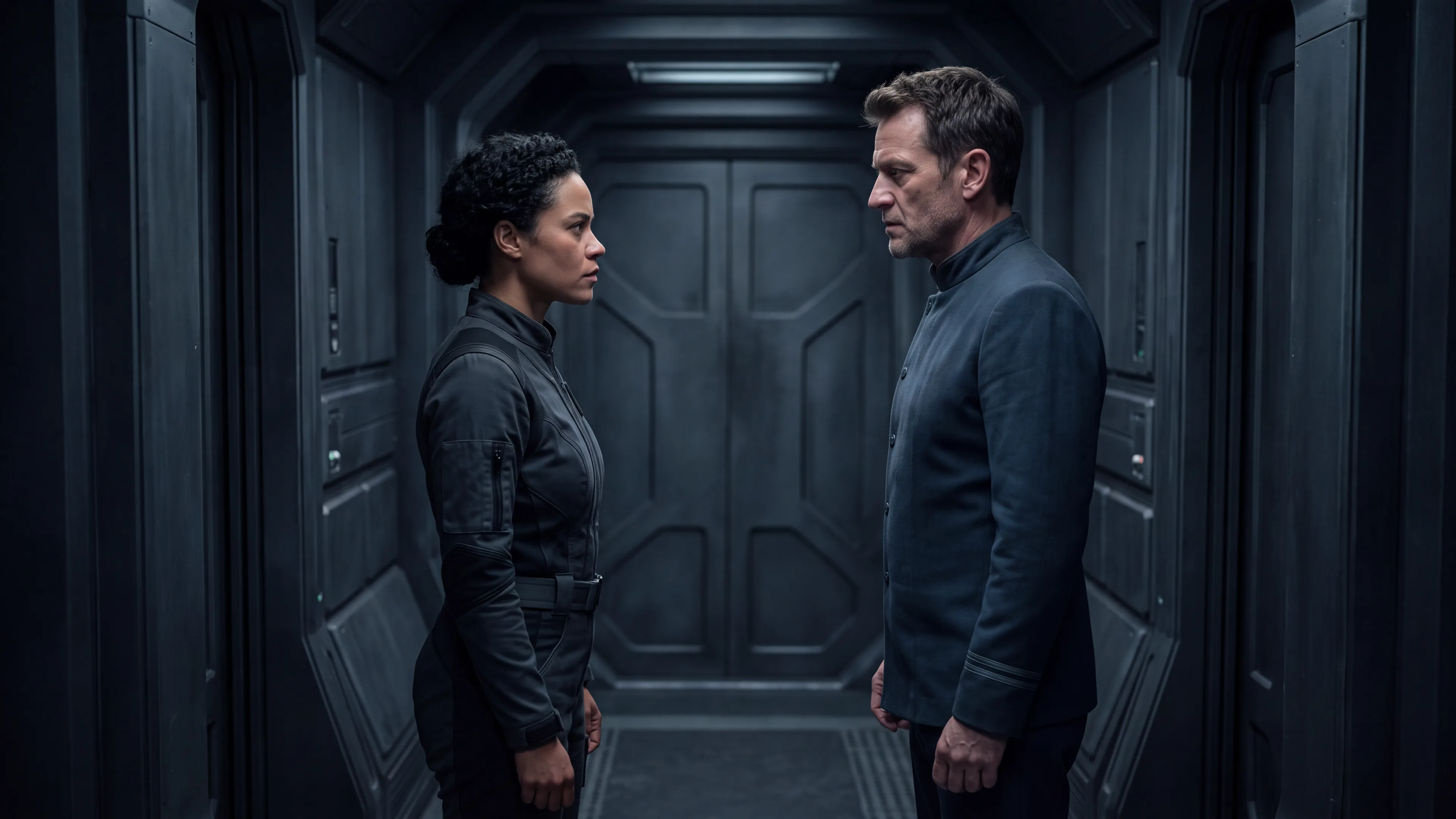
Chapter 1: two officers from opposing factions, assigned to the same warship.
What is the heat level?
You Already Know If This Book Is Yours
You want the hatred to dissolve so slowly you cannot name the chapter or the page where it stopped.
You want his chapters to wreck you. He knows exactly what he feels and will not say it.
You want hers to wreck you too, because she is three steps behind you and furious about every one.
That book exists, and it is The Starfall Accord.
Want to Know the Moment the Next Enemies to Lovers Book Lands?
Join the list and one email goes out the day the next Starfall novel is ready, along with release updates and the odd bonus scene.
Unsubscribe with a single click whenever you like.
Free reader's guide
Get the Starfall Accord Field Guide
No spoilers.
Know exactly what you are getting before you spend a cent, and the Field Guide lands in your inbox as soon as you leave your email.
Inside: The crew · The two factions · The trope map · Full content safety notes.
You will also be the first to know the day The Starfall Accord goes on sale.
The Questions Every Slow Burn Reader Asks First
Heat level, series commitment, content notes.
The honest answers before you click buy.
What is enemies to lovers slow burn in space opera?
Is The Starfall Accord a slow burn romance?
What makes space opera enemies to lovers different from fantasy?
Does the romance develop across the whole book or happen quickly?
Is there forced proximity in The Starfall Accord?
Do I have to commit to a whole series to get the payoff?
What is the heat level?
Are there content warnings?
Which other enemies to lovers slow burn space operas should I read?
What are some clean enemies to lovers books?
Is this an alien romance?
Is The Starfall Accord available to buy right now?
You Found It. Now Read It.
One warship.
Two people who should never have been assigned together.
Fourteen chapters of tension before the first kiss, and a guaranteed happy ending worth every page it takes.
The Starfall Accord is AI assisted fiction, edited line by line by a human author.
Read chapters one to three free.
Yours forever, on any device you already own.
Ebook $4.99 USD.
Price in USD.
Australian buyers pay GST and EU buyers pay VAT on top where it applies. UK ebooks carry no VAT.
- Direct from the author
- Yours to keep
- Read on any device
Sera Voss wrote it and Starbound Press published it. It runs to 90,000+ words, carefully edited, and is sold to readers directly.
Curious about the heat level? See where this closed door slow burn sits on the spice scale.
Keep Reading
- factional stakes rather than personal ones for the plots where the politics are load bearing.
- what a slow burn actually is for the pacing readers mean, and how to spot it before chapter four.
- why only one bed keeps working for the trope in full, and the versions that still surprise a reader.
- the dual POV page for romance where you get both heads, not just the one.
- clean sci fi romance books for why the word means three different things and how to tell them apart.
- the sci fi romance ebook page for the formats, the length, and how it reaches your device.
- space opera romance worth the time with the trope stack named on every entry.
- the no aliens, human only page for readers who want the stars without a single alien mate.
- forced proximity romance books set in space for the trope where the walls do the work the plot usually has to.
- why enemies to lovers feels so satisfying for what the hostility is actually doing before it turns.
- heroes who fall first in sci fi romance for the books where the hero is gone long before she notices.
- the hurt comfort trope for the trope that does its best work between enemies.
- the book hangover for why the right ending still leaves you unable to start anything else.