Romance Glossary · by Sera Voss
Closed Door Romance: What It Means and Why It Hits Hardest
What is closed door romance?
Intimacy stays off the page.
See the open door meaning, a side by side chart, and why closed door can hit harder.
Last updated: 1 October 2026
Closed door romance keeps intimate scenes off the page, so physical intimacy is implied rather than shown.
If that is how you like to read, our own book, The Starfall Accord, keeps sexual content off the page, with a human only cast and no aliens.
The first three chapters are free, with no email collected.
See the restraint for yourselfThe name is literal. Whatever happens behind a closed door stays behind it.
The narration walks the reader to the threshold, steps outside before anything explicit, and rejoins the characters afterward.
Every feeling stays on the page. Only the act is left to the reader.
For closed door science fiction specifically, where to start with human only closed door sci fi romance lists five entry points with the heat level of each stated plainly.
Closed Door vs Open Door Romance: What Each Means
Open door romance means the intimate scenes are shown on the page, while closed door romance means they happen off it.
The difference is what the reader sees, not how much the characters feel.
| Compared on | Closed Door | Open Door |
|---|---|---|
| The sex scene | Implied, off the page | Shown on the page |
| Where the heat lives | Tension, restraint, dialogue | The explicit scenes themselves |
| The fade to black | Yes, before explicit content | No, the scene continues |
| What you actually read | The approach and the aftermath | The scene itself, in detail |
| Best for readers who want | Emotional intensity without explicit detail | Physical payoff shown directly |
Everything either side of the sex scene can be written exactly the same way, with the same longing and the same stakes.
A closed door romance novel is not less romantic. It puts the intensity somewhere else.
The spice level scale maps the rest of the range, from sweet through to scorching.
Know you want the door shut? Browse closed door romance books across several genres, with the source named for each heat rating or marked not stated.
Closed Door Done Right: The Starfall Accord
The Starfall Accord by Sera Voss is closed door sci fi romance, with no explicit content and no abrupt fade that leaves the feeling unfinished.
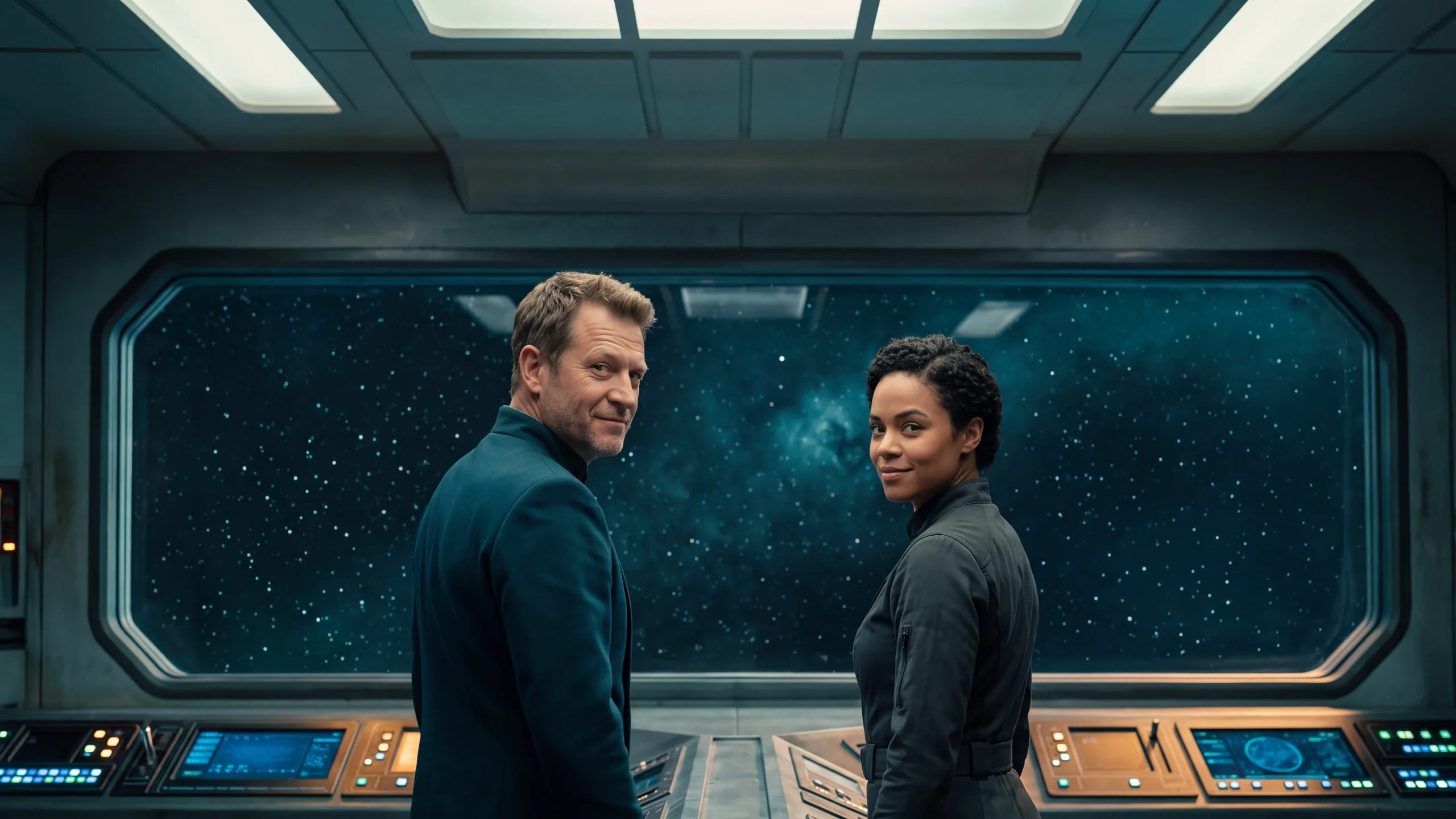
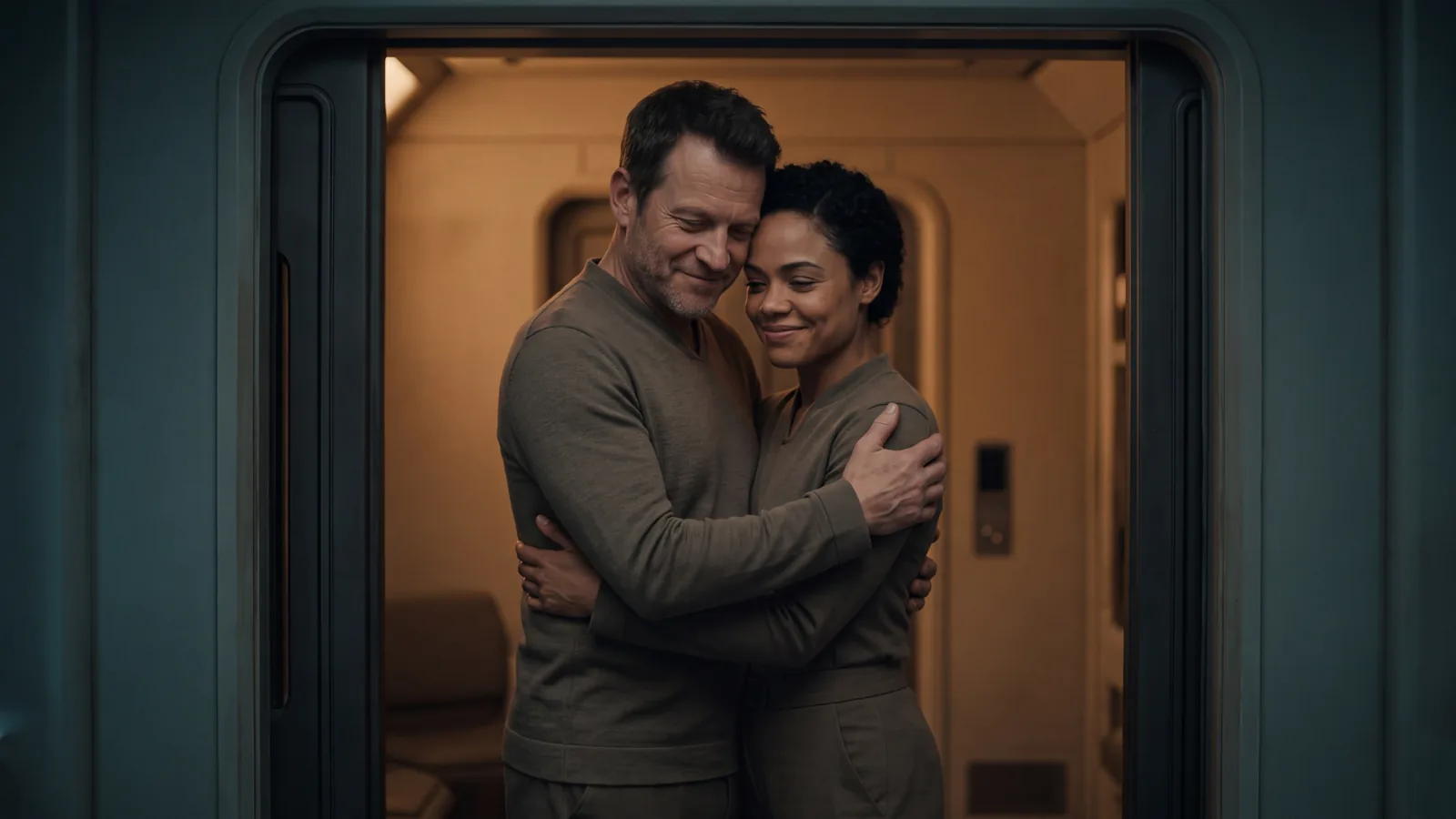
What happens between Commander Thane Aldric and Coalition Liaison Kira Vasic stays off the page, but the wanting does not.
Thane keeps his distance to protect his crew. Kira distrusts his authority while she hunts a saboteur aboard the ship.
Everything that matters happens in the looks they hold too long and the lines they refuse to cross until the story makes crossing them inevitable.
Closed door pairs naturally with the site's other trust signal: a human only, no aliens sci fi romance cast, so you know before buying exactly what is and is not on the page.
What the closed door approach gives you here:
- Heat carried entirely by tension, restraint, and what the leads will not let themselves say
- A burn that pays off through conflict and proximity, never through an explicit set piece
- Two narrators, so you hear the restraint from both sides at once
- A human only cast with no aliens, and a happy ending that resolves inside this single book
If you want the heft of a space opera and the ache of a real romance without anything explicit on the page, this is your book.
Read a Free Sample of The Starfall AccordIf you want other books rather than the definition, a searchable shelf of closed door romance holds every genre in one filter, free and with no account.
Every heat rating in it names the page it came from. The sourced shelves behind it:
- Closed door contemporary romance
- Closed door historical romance
- Closed door romantasy and fantasy romance
- Closed door romantic suspense and cozy mystery
- Closed door science fiction romance
Or go straight to the closed door space opera this page is built around. Enemies to lovers, told by both leads, human only with no aliens, closed door, and one book that finishes its own story.
See the book · coming soonAustralian buyers pay GST and EU buyers pay VAT on top where it applies. UK ebooks carry no VAT.
Frequently asked questions
What is closed door romance?
Closed door romance keeps intimate scenes off the page.
The relationship and its physical intimacy are implied rather than shown, so the story fades out before explicit content and resumes after.
The emotional weight stays on the page even though the explicit detail does not.
What is the difference between closed door and open door romance?
Open door romance shows intimate scenes on the page, with varying degrees of explicit detail.
Closed door romance fades to black before those scenes, leaving the physical intimacy implied.
Both can be deeply romantic.
The difference is what the reader sees, not how much the characters feel.
What does closed door mean in a book?
It means the book has romance and physical intimacy, but the intimate scenes happen off the page.
A book described as closed door can still be tense, emotional and adult in every other way.
What is fade to black in romance?
Fade to black is the technique closed door romance uses to move past intimate scenes.
The narrative stops at the threshold of an explicit moment and resumes afterward, leaving what happened implied.
It is the on page mechanic that makes a book closed door.
Free reader's guide
Get the Starfall Accord Field Guide
No spoilers.
Know exactly what you are getting before you spend a cent, and the Field Guide lands in your inbox as soon as you leave your email.
Inside: The crew · The two factions · The trope map · Full content safety notes.
You will also be the first to know the day The Starfall Accord goes on sale.
Ready to Fall Into the Stars?
Enemies. Allies. Something more. The Starfall Accord begins with a single, impossible truce.