Sci Fi Romance Dual POV Books That Get Under Your Skin
By Sera VossSci Fi Romance Author
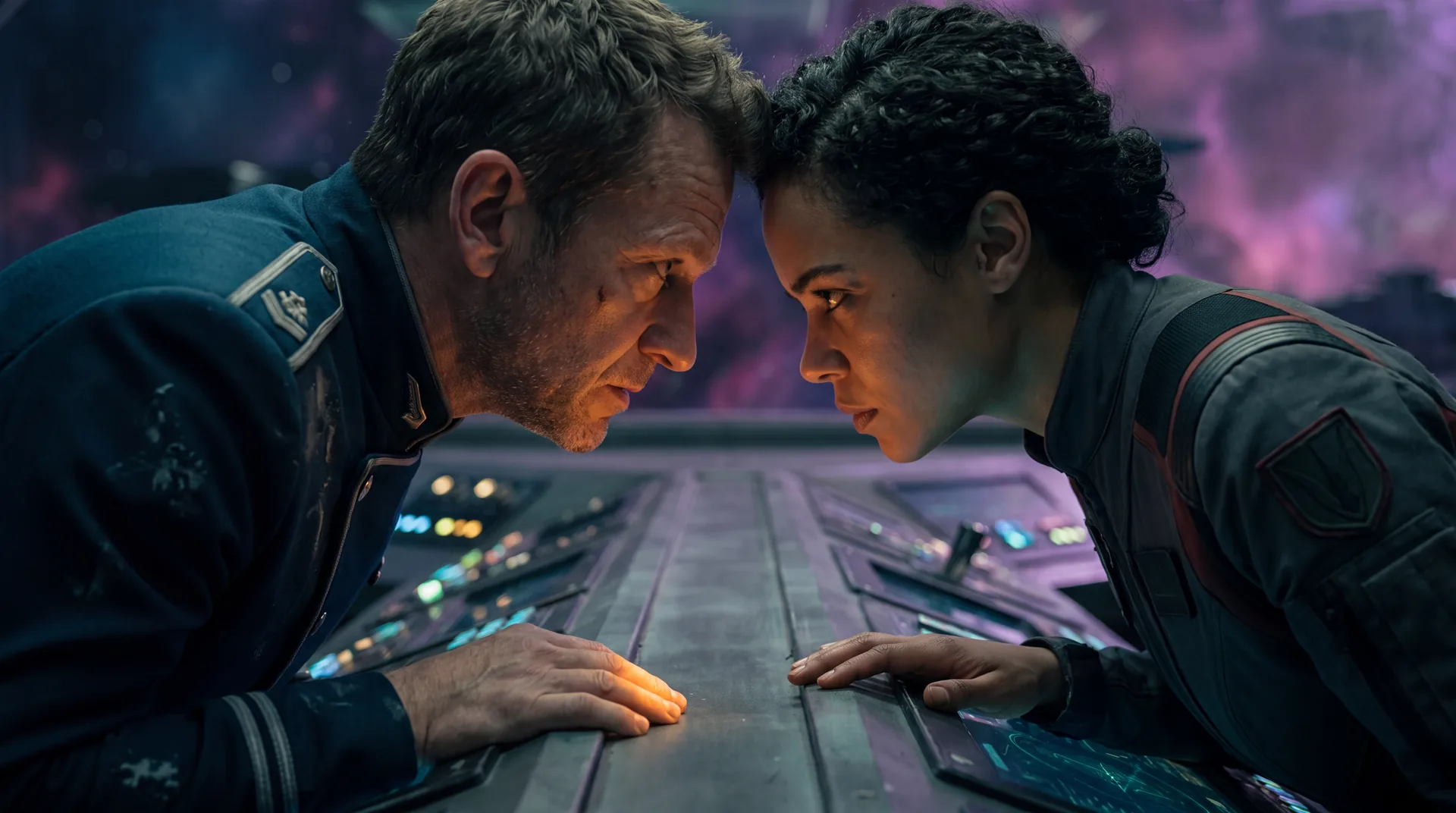
The best sci fi romance dual POV books, told from both points of view, put you inside both leads' heads at once.
You feel every misread signal, and both sides of the fall at the same time.
Standouts include Ice Planet Barbarians, Strange Love, The Last Hour of Gann, and Choosing Theo, and for a human only, no aliens take, the human only space opera behind all of this.
It is not for you if you prefer a single narrator, because the story alternates between two heads.
This site publishes and sells The Starfall Accord, so its place on this list is the author's own pitch, not a neutral judgment call. The other four titles earned their spot because they actually deliver on dual POV.
For what the format actually does to a love story, see dual POV romance books.
See the book · $4.99 USD · launching soonThe Books That Do It Right
Ice Planet Barbarians by Ruby Dixon (2015) alternates between Georgie, a human woman stranded on a frozen alien world, and Vektal, the blue warrior who finds her.
Dixon lets Vektal be besotted long before Georgie understands the situation. His chapters are warm and certain and completely alien; hers are terrified and pragmatic and very human.
The contrast is funny, tender, and surprisingly moving, and the dual POV is exactly why it works.
Strange Love: The Comedic Version
Strange Love by Ann Aguirre (2020) takes a lighter, more comedic approach.
Beryl and Zylar are both awkward, both earnest, both deeply out of their depth in an alien mating competition neither of them chose. Aguirre lets both be wrong about each other in endearing ways.
The Last Hour of Gann: A Different Category Entirely
The Last Hour of Gann by R. Lee Smith (2013) is a long, brutal, epic novel.
Amber is stranded on an alien world after her ship crashes. Meoraq is a lizard warrior priest on a religious pilgrimage who finds her.
Smith uses the dual POV to build two fully realized cultures in collision.
Note: this book carries content warnings for graphic violence and sexual content.
Choosing Theo: The Gentler Option
Choosing Theo by Victoria Aveline (2020) offers something gentler. The human woman at the center is given a choice of alien mates and selects Theo, the one no one else wanted.
The dual POV reveals his quiet, cautious interiority alongside her own determination. You understand why she chose him before he does.
Why Dual POV Changes Everything in Sci Fi Romance
In a standard romance, dramatic irony is a garnish. In a dual POV space romance, it becomes the ground the whole story stands on.
He believes she is indifferent. She believes he is cold. You know they are both wrong.
That gap creates suspense that has nothing to do with plot and everything to do with emotional inevitability.
Science fiction earns this structure in a particular way. Two people from different worlds, different species, or different sides of a war carry that distance in their bodies.
When you get both of their heads, the contrast reaches all the way down to how each of them was raised to see the other side.
The One That Gets Both Heads Right
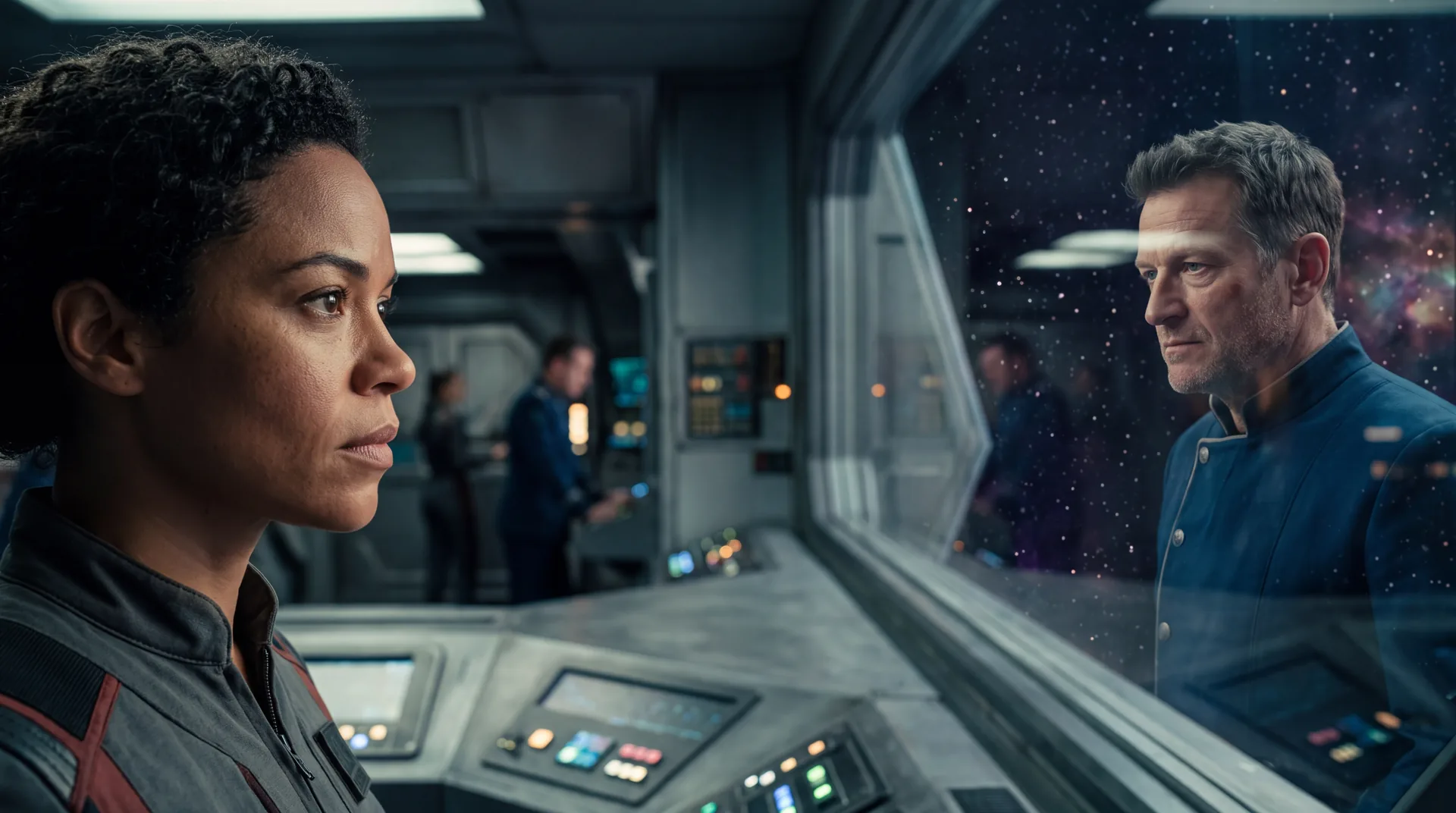
The Starfall Accord by Sera Voss was built for both heads equally inhabited: two full narrators, chapter for chapter, both carrying equal weight.
No aliens appear in it, the cast is human throughout, the door stays closed, and the ending is guaranteed to be a happy one.
A Coalition operative and a Dominion commander. A fragile peace neither of them trusts. A negotiation that is supposed to be strategic and keeps becoming something else.
Both are competent and guarded, and both keep watching the other for a weakness.
The Attentiveness Itself Is the Weakness
The reader can see the problem before either character can. They are both paying too much attention to someone they are supposed to regard as an obstacle.
The slow burn enemies to lovers structure is familiar. The execution earns the slow burn instead of just promising it.
How the Chapters Alternate
The chapters alternate with a rhythm that mirrors the treaty negotiations. You get his read of a conversation, then hers, always slightly off from each other.
Each pairing covers the same time window from two angles, and the gap between what he understood and what she understood is the story.
By the time the moment finally comes, you have been carrying both of them for so long that you feel it twice.
See the book · $4.99 USD · launching soon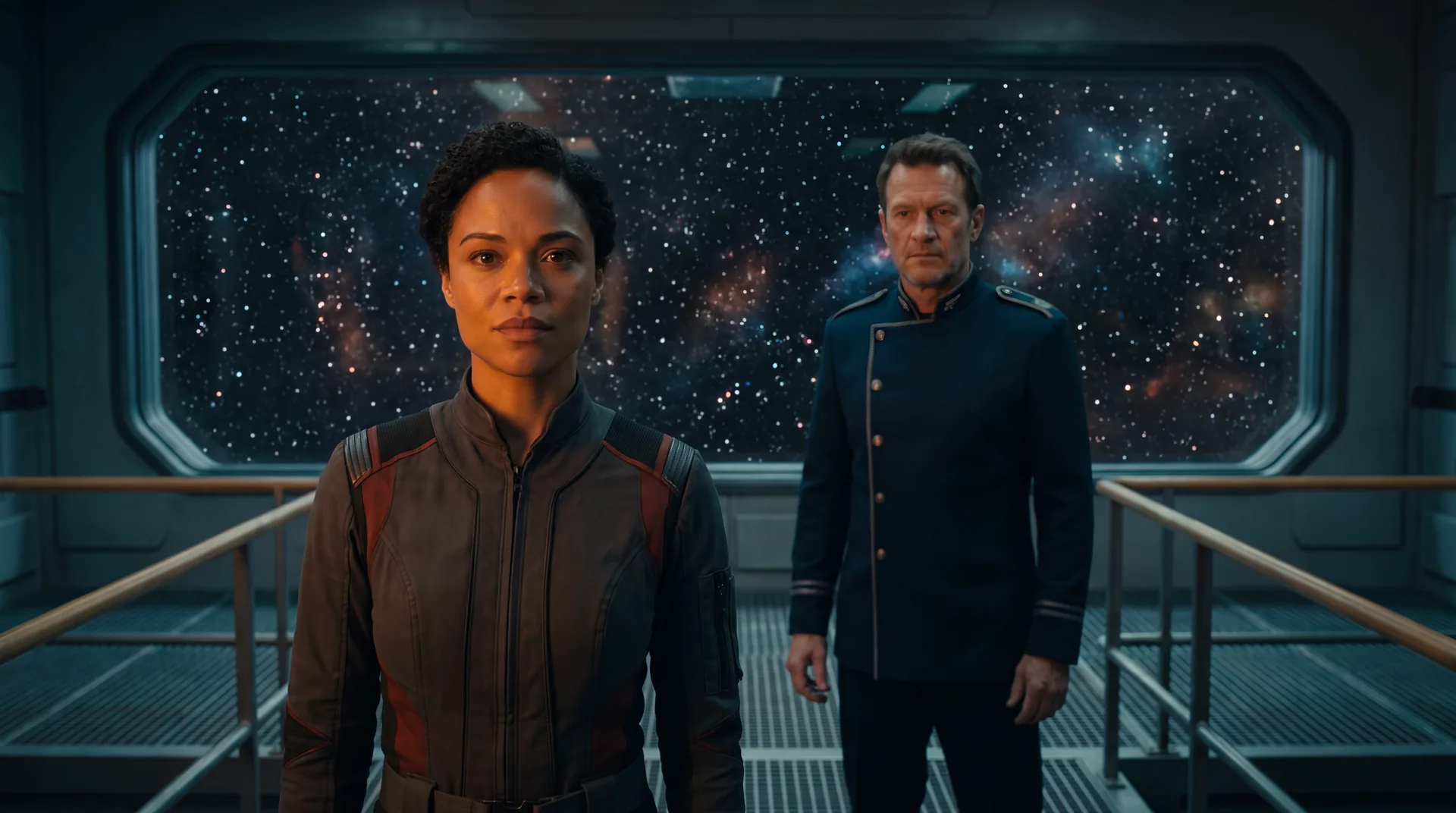
What The Starfall Accord's Dual POV Actually Delivers
Most enemies to lovers romances show you the hostility from one side and let you infer the other.
Here you watch two people maintain a hostility neither of them fully believes anymore, while both pretend they do.
- Both characters have full chapters, each with real interiority. Neither perspective exists only to move plot.
- The alternating rhythm is deliberate. The same moment arrives filtered through two different histories.
- The emotional payoff is cumulative. You have been waiting for both of them, and you get both of them at once.
You can read the free opening chapters and feel both heads for yourself, or go straight to the book itself.
For the filterable list version of this analysis, the dual POV shelf of the Next Read Picker holds every dual POV book on our list.
See the book · $4.99 USD · launching soonAustralian, EU and UK buyers see the exact GST or VAT inclusive price at checkout.
Frequently asked questions
What are the best sci fi romance dual POV books?
Strong dual POV sci fi romances include Ice Planet Barbarians by Ruby Dixon, Strange Love by Ann Aguirre, The Last Hour of Gann by R.
Lee Smith, and Choosing Theo by Victoria Aveline.
For a human only, no aliens option, The Starfall Accord by Sera Voss alternates two full narrators chapter by chapter.
What makes a dual POV sci fi romance good?
A good dual POV gives both leads full chapters with real interiority: two people whose histories, doubts, and blind spots are equally present on the page.
Both perspectives interpret the same events through different histories, so the reader holds a truth neither character has admitted yet.
Which dual POV sci fi romance has no aliens?
The Starfall Accord by Sera Voss is a human only space opera with no aliens.
It alternates a Coalition operative and a Dominion commander chapter by chapter, keeps the door closed, and delivers a guaranteed happily ever after.
It is $4.99 USD as EPUB and PDF, launching soon direct from the author at spacemance.com.
What content warnings does The Last Hour of Gann carry?
The Last Hour of Gann carries content warnings for graphic violence and sexual content, per this site's roundup, and no formal door label is stated.
Readers sensitive to those elements should check before starting.