Best Enemies to Lovers Romance in Space: Books That Actually Commit to the Tension
By Sera VossSci Fi Romance Author
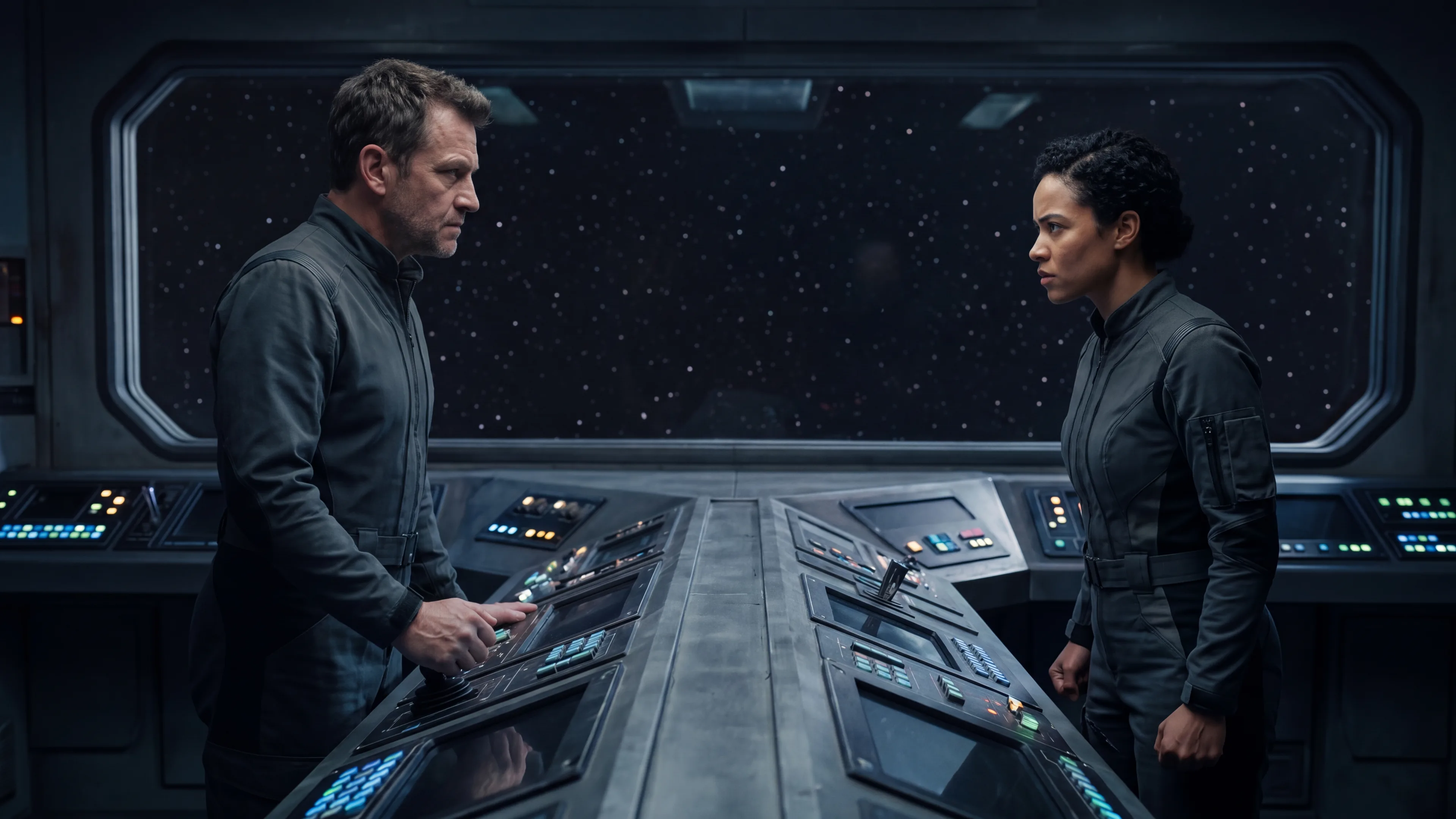
For the best enemies to lovers romance in space with the door closed and a human only cast, Sera Voss's debut is the title we publish.
This one is not for you if you want the hate to melt inside three chapters.
Genuine enmity, one warship, fourteen chapters of forced proximity before the first kiss, and a complete HEA (a happily ever after) with no cliffhanger.
The Starfall Accord is the book this site publishes and sells, so treat that pick as the author's own case for it rather than a neutral review.
Every other title on this page earned its place on the brief alone, and each entry reports what publicly available publisher and retailer listings state.
The short list: Shards of Honor by Lois McMaster Bujold, Polaris Rising by Jessie Mihalik, Hunt the Stars by Jessie Mihalik, and Defy the Stars by Claudia Gray. Each is set out below with its cast, and with its heat level and source where one has been stated.
Enemies to Lovers Space Romances That Hold the Tension
These enemies to lovers space romances each hold the hostility before the fall.
Every one makes a different trade on heat level, point of view, and whether the cast is human or includes aliens:
- Polaris Rising by Jessie Mihalik (2019, Harper Voyager): human only, open door moderate heat, Book 1 of the Consortium Rebellion. A runaway heiress is locked up with a notorious fugitive she has to strike a deal with: captor and captive antagonism that slowly turns.
- Hunt the Stars by Jessie Mihalik (2022, Harper Voyager): includes aliens, open door heat, Book 1 of Starlight's Shadow. A human bounty hunter is forced to take a job from the alien general she fought in the war.
- Shards of Honor by Lois McMaster Bujold (1986, Baen Books): human only, closed door, Book 1 of the Vorkosigan Saga. Two officers whose worlds are at war are stranded on the same hostile planet and end up staking their survival on each other. The book the whole subgenre is built on.
- Defy the Stars by Claudia Gray (2017, Little, Brown): no aliens (human and android leads), closed door, young adult, Book 1 of the Constellation trilogy. A devout soldier and the enemy machine she was raised to hate cross an interstellar war side by side.
Every detail above is reported from publicly available publisher and retailer listings, checked in June 2026.
Heat, point of view and series position come from those listings, not from reading the books ourselves.
If you want a fifth option built around exactly this trope, the standalone with a guaranteed happy ending runs fourteen chapters of forced proximity aboard one warship before the first kiss.
It is dual POV (both points of view), human only sci fi romance with no aliens, closed door, and a standalone HEA with no cliffhanger.
Jump to the full breakdown below for how it holds up.
See the book · $4.99 USD · launching soonWhere The Starfall Accord Delivers
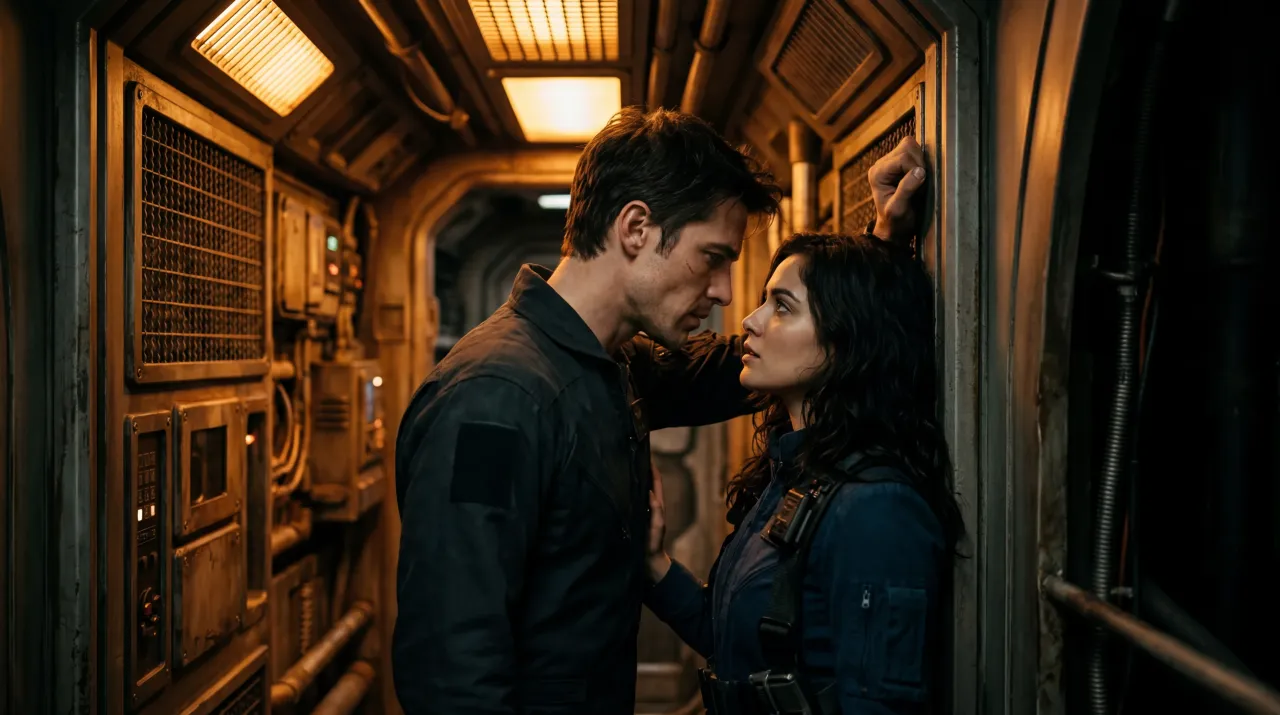
A ship has a finite number of rooms. When no signal will reach home in time to matter, you depend on the people around you, even the ones you hate.
Preloaded History, Not Manufactured Conflict
The two leads enter the story already carrying a past. They know precisely how to get under each other's skin because they have done it before.
When they fight, they drag in everything they are still carrying from the last time.
The forced proximity is handled with precision. Every time they might find a way to coexist at a distance, the story closes that door.
The Ache, Not an Early Exit
There is no chapter where the tension deflates before it has fully built.
No premature softening and no shortcut through the conflict: no kiss before chapter fifteen of twenty two.
See the book · $4.99 USD · launching soonWhen You Want E2L That Holds the Tension to the End
The books that deliver this trope do not treat the enmity as an obstacle to clear. They treat it as the point.
The Starfall Accord is built for exactly that: loaded history, forced proximity with no exits, and a slow burn that holds until the very end.
See the book · $4.99 USD · launching soonAustralian, EU and UK buyers see the exact GST or VAT inclusive price at checkout.
Frequently asked questions
What is the best enemies to lovers romance in space?
It depends which part of the pairing matters most to you.
Jessie Mihalik's Polaris Rising and Hunt the Stars are two traditionally published options in the same space.
The Starfall Accord, the title we publish, is the closed door and human only choice.
You get genuine enmity, one warship, and fourteen chapters of forced proximity before the first kiss.
It is dual point of view, with a complete happily ever after and no cliffhanger.
Do enemies to lovers space romances always have aliens?
No.
Many do, but human only enemies to lovers space operas exist.
The Starfall Accord is set in a human only universe with no aliens, so the conflict is entirely between people on opposite sides of a war.
How slow is the burn in the best enemies to lovers space romances?
It varies, but the strongest examples earn the turn over many chapters.
In The Starfall Accord the first kiss arrives in chapter fifteen of twenty two, after fourteen chapters of forced proximity.